There is no cure for the common cold. That is the honest starting point, and any article that suggests otherwise is selling something. A cold is a viral infection that your immune system clears in its own time, usually seven to ten days, and nothing in your kitchen will shorten that by much.
What your kitchen can do is make those seven to ten days considerably less miserable. Symptom relief is not nothing: a sore throat that stops hurting enough to let you sleep is worth a great deal, and sleep is one of the few things that genuinely helps your immune system do its work. That is the promise of this article, and it is deliberately a modest one.
"The kitchen will not cure your cold. It will make the week it lasts a great deal kinder. Those are different things, and only one of them is being sold to you."
Mama SaraWhat follows is sorted honestly: the remedies with real evidence first, then the ones that are pleasant but overstated, then the point at which you should stop brewing tea and call a doctor.
What the Evidence Actually Supports
This is the strongest item on the list by a wide margin, and the one most people underrate because it sounds too simple. Reviews of the trial evidence have found honey more effective than no treatment for acute cough, and broadly comparable to over-the-counter cough suppressants. UK clinical guidance now recommends honey as a first option for acute cough rather than a cough medicine.
It is thought to work mechanically rather than pharmacologically: honey is viscous, so it coats and soothes the irritated tissue at the back of the throat, and the sweetness itself appears to suppress the cough reflex. Whether it is expensive raw honey or an ordinary jar matters much less than people claim.
Never give honey to a baby under 12 months old. Honey can contain spores that cause infant botulism, a rare but serious illness. The infant gut cannot handle them; an older child's can. This is not a cautious-sounding generality, it is a firm rule with no exceptions, and it applies to raw and pasteurised honey alike.
Unglamorous, nearly free, and genuinely useful. Gargling with warm salt water reduces throat discomfort, and there is reasonable trial evidence that regular gargling during an upper respiratory infection eases symptoms. The likely mechanism is osmotic: the salt draws fluid out of swollen tissue, which reduces the swelling that causes the pain.
Half a teaspoon of salt in a large glass of warm water, gargled for thirty seconds and spat out, several times a day. It will not taste pleasant. It works anyway.
Hot drinks provide immediate relief from a runny nose, cough, sneezing and sore throat in a way that the same drink at room temperature does not. The effect is partly real and partly the simple comfort of a warm drink when you feel wretched, and it does not matter much which it is when you are the one holding the mug.
Staying properly hydrated also keeps mucus thinner and easier to shift, which is the unglamorous mechanism behind most of what helps a chesty cold. Water, herbal tea, broth and diluted juice all count. For more on this, see our guide to hydration beyond water.
Ginger has good evidence behind it for nausea specifically, which matters more than it sounds during a bad cold, when swallowed mucus and broken sleep frequently leave the stomach unsettled. Its anti-inflammatory compounds, chiefly gingerol, are well characterised.
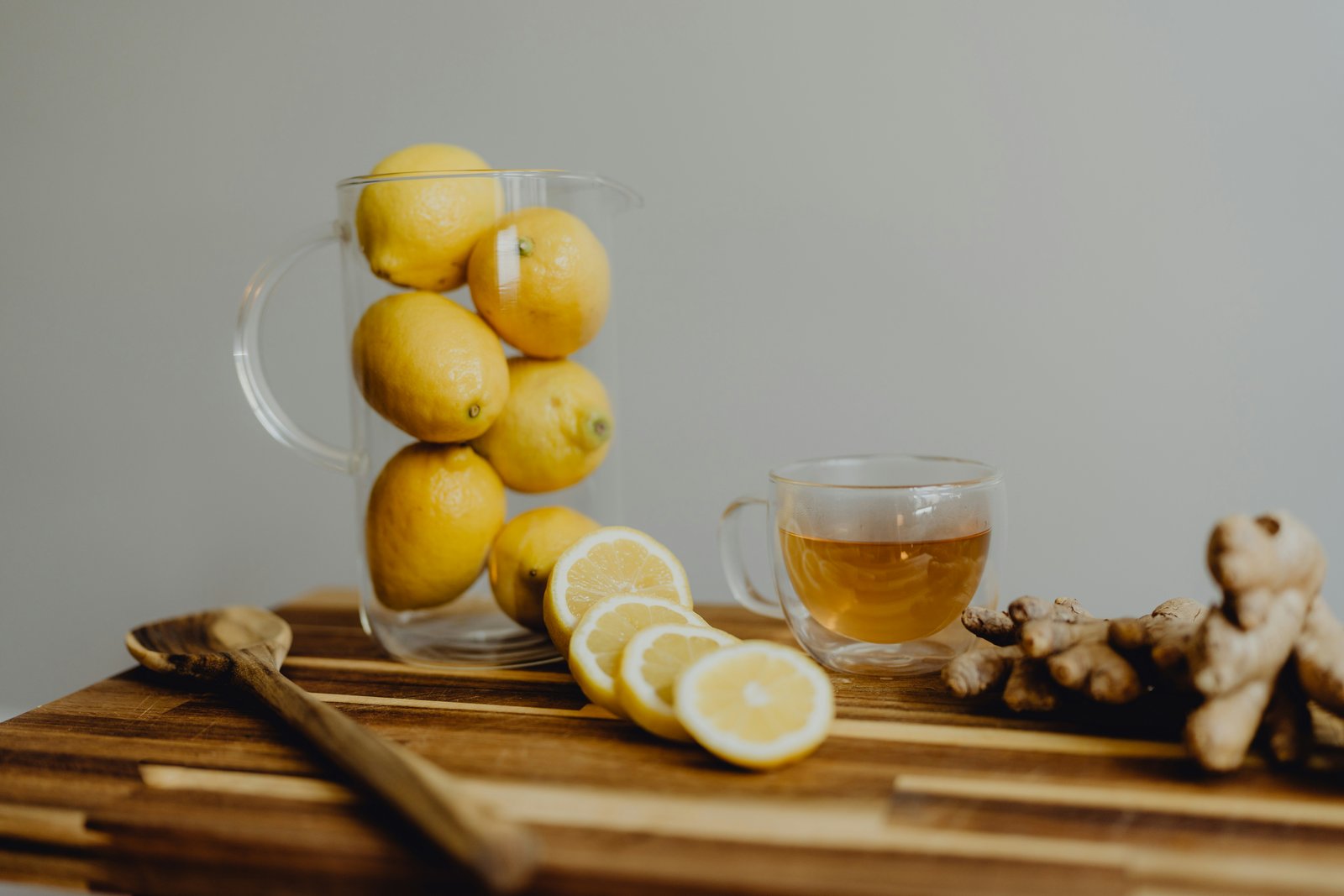
For the cold itself the honest answer is that ginger is a warm, pungent, soothing thing to drink, and that is most of its value. Fresh root steeped in hot water for ten minutes, with honey and lemon, is better than any shop-bought preparation.
The chicken soup research is real, if modest: a well-known laboratory study found that chicken soup slowed the movement of certain inflammatory cells, offering a plausible mechanism for the mild anti-inflammatory effect people have reported for centuries. It is not a dramatic finding and it should not be oversold.
What is not in doubt is that broth delivers warm fluid, salt and a little protein in a form that is easy to get down when nothing else appeals, and that eating something is better than eating nothing. Recipes and method are in our batch cooking guide, and a batch in the freezer in October is a kindness to your February self.
Pleasant, but Overstated
These are not useless, and none of them will do you harm in food quantities. But each is claimed to do considerably more than the evidence supports, and knowing the difference saves both money and disappointment.
The best available evidence is consistent and widely misunderstood: for the general population, routine vitamin C supplementation does not prevent colds. It may shorten one slightly, on the order of hours rather than days, and that benefit appears mainly in people under heavy physical stress, such as marathon runners.
Taking a large dose once symptoms have started does not reliably help at all. A lemon in hot water is a pleasant, hydrating, mildly soothing drink. Enjoy it as that, not as a treatment, and note that boiling water degrades some of the vitamin C anyway.
Garlic is genuinely interesting in the laboratory, and allicin, the compound formed when a clove is crushed, has measurable antimicrobial activity in a dish. Translating that into "garlic fights your cold" is a much bigger leap than it is usually presented as.
The human evidence is thin: essentially one small trial suggesting fewer colds among people taking a garlic supplement, never convincingly replicated. Eat garlic generously, because it is excellent for you for many other well-supported reasons. Do not expect it to shorten a cold.
This is the one most likely to surprise people. Leaning over a bowl of hot water with a towel over your head feels as though it must be doing something, but trials of steam inhalation for the common cold have not found consistent benefit, and there is a real and documented risk of scalding, particularly with children.
A warm shower achieves the subjective loosening effect with none of the burn risk. If steam helps you, use the shower.
When to Stop Self-Treating
This is the part most natural remedy articles leave out, and it is the most important section here. Kitchen remedies are for an ordinary cold in an otherwise healthy adult. Seek medical advice promptly if any of the following apply.
You have difficulty breathing or chest pain. You have a severe sore throat on one side, especially with drooling, voice change or trouble opening your mouth. You have a high fever that persists beyond three days, or a fever that returns after you had started improving. Symptoms last more than ten days or are clearly worsening rather than easing. You have a stiff neck with headache, or a rash that does not fade under pressure. You are pregnant, immunocompromised, or managing a chronic lung or heart condition. The patient is an infant, a young child, or an older adult, where thresholds are lower and deterioration faster.
None of that is a reason to avoid honey and a warm drink. It is a reason to keep the two things separate in your mind: comfort measures on one side, medical assessment on the other, and no hesitation about reaching for the second when it is warranted.
A Note on Using These Well
The things that most reliably reduce how often you get ill are not remedies at all. They are sleep, a diet built on whole foods, managing stress, and washing your hands. They are deeply unglamorous and they do far more than anything in a mug.
If you are pregnant, breastfeeding, taking regular medication or managing a long-term condition, speak to a pharmacist or doctor before using any of these therapeutically rather than as food. Ginger and garlic in particular interact with blood-thinning medication, and a pharmacist will answer that question for free in about two minutes.
With those caveats in place: make the tea, add the honey, gargle the salt water, and go back to bed. That last part is the remedy most people skip.
"Rest is the one remedy nobody can sell you, which may be exactly why it is the one you hear least about."
Mama Sara