In 1986, a McDonald's opened at the foot of the Spanish Steps in Rome. A food journalist named Carlo Petrini was so offended (not just aesthetically, but philosophically) that he organised a protest. Demonstrators handed out bowls of penne to passers-by on the steps. It was a small, slightly absurd act of defiance. It was also the beginning of one of the most meaningful food movements of the past century.
Petrini called his movement Slow Food, and its founding manifesto declared that "a firm defence of quiet material pleasure is the only way to oppose the universal folly of Fast Life." What started as Italian culinary protest has grown into a global organisation with chapters in over 160 countries, and an idea that feels more relevant now than it did in 1989 when it was formally founded.
But you don't need to join a movement to live by its values. Slow Food is less an organisation and more an orientation: a way of thinking about what we eat, where it comes from, who grew it, and how we sit down with it.
"Food is not fuel. It is culture, pleasure, identity, and connection. When we treat it as mere convenience, we lose something that is very difficult to get back."
Inspired by Carlo Petrini, Slow Food founderWhat Slow Food Actually Means
The Slow Food movement is built on three interconnected principles that are deceptively simple and genuinely radical in today's food landscape. They call them good, clean, and fair.
Why It Matters Right Now
We are living through what food historians will likely call the great acceleration of eating. The average British person now spends less than 34 minutes a day on food preparation. The average American eats one in five meals in their car. Ultra-processed foods now account for more than half of the calories consumed in the UK and US, foods engineered to be eaten quickly, alone, and in quantities that bypass the body's natural satiety signals.
The consequences are not subtle. Rates of diet-related illness (type 2 diabetes, cardiovascular disease, gut dysbiosis, certain cancers) have risen in near-perfect correlation with the rise of fast food and ultra-processed eating over the past fifty years. This is not coincidence. It is causation, and the evidence is now overwhelming.
But the damage is not only physical. There is something that happens to a community when it stops cooking and eating together. The family dinner table, for all its clichéd associations, was a place where children learned what food was, where it came from, what their culture tasted like. When that disappears, something harder to name (but very real) disappears with it.
You don't need to overhaul your entire relationship with food overnight. Start with one meal a week that you cook from whole ingredients and eat without screens. Just one. Notice what that feels like, not as a discipline, but as a pleasure. That is the beginning of Slow Food.
How to Live It Without Romanticising It
It is easy to romanticise Slow Food into something that only works if you have a farmhouse in Tuscany, unlimited time, and a wood-fired oven. That is not the movement Petrini intended, and it is not what the philosophy actually requires.
Living slowly with food does not mean spending hours in the kitchen every night. It means being intentional about what you buy and what you eat, even if the meal takes twenty minutes to make. It means choosing real ingredients over processed ones when you can. It means sitting down when you eat, rather than eating over a sink or in front of a screen.
In practice, it looks like this:
Knowing one local food producer. One farmer, one baker, one cheese maker, one market stall. When you know where your food comes from and who grew it, your relationship with eating changes in ways that are difficult to articulate but unmistakable in practice.
Cooking seasonally, even loosely. Not religiously, not obsessively, but with a general awareness that strawberries in December have travelled a long way and taste accordingly, and that a bowl of roasted root vegetables in November is one of the most satisfying things a kitchen can produce.
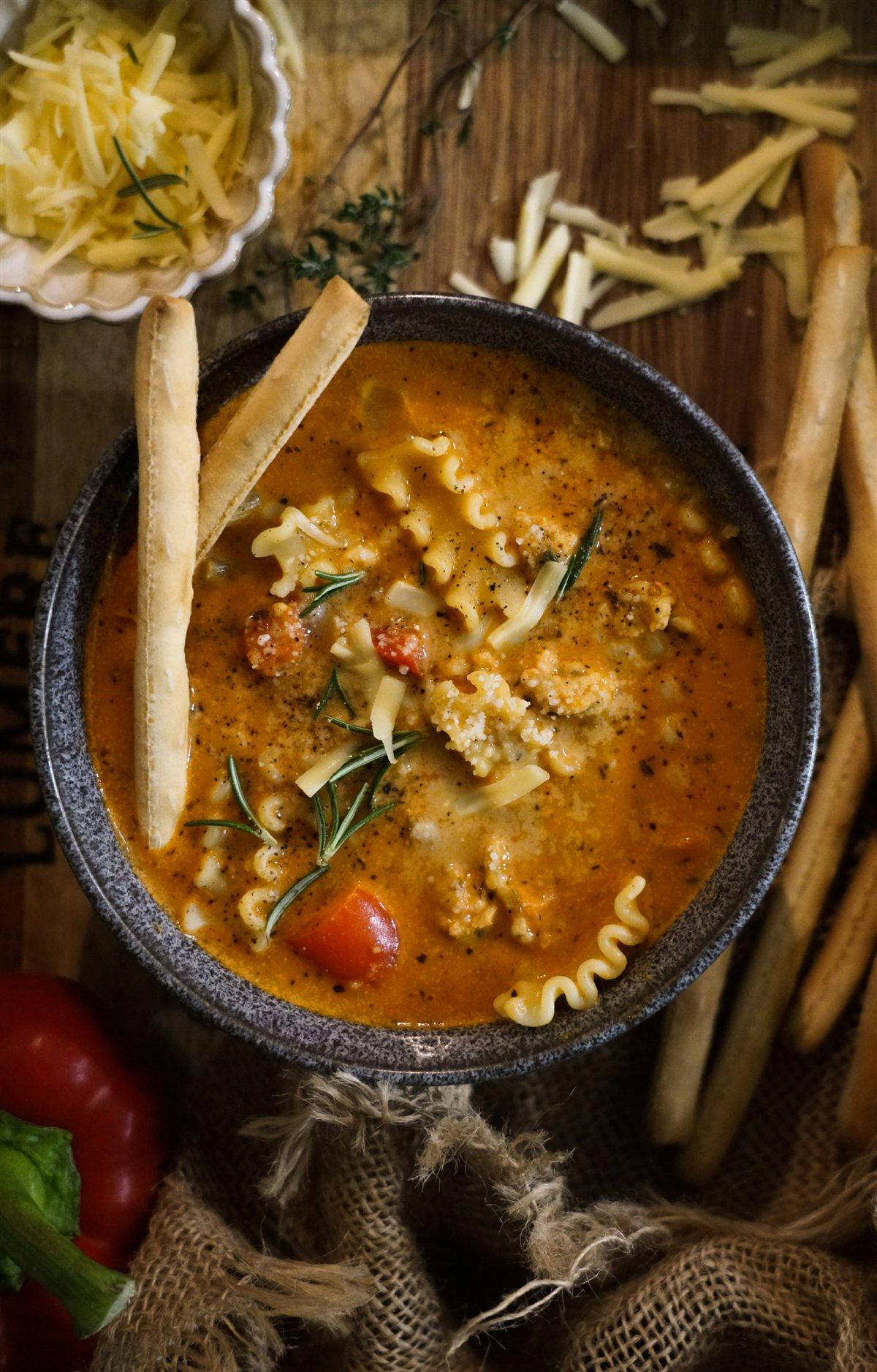
Making one thing from scratch each week. A Sunday reset session is the practical expression of this. A loaf of bread. A batch of soup. A simple pasta sauce. The act of making food from its raw ingredients reconnects you to what food actually is, and makes it taste dramatically better, because you understand what went into it.
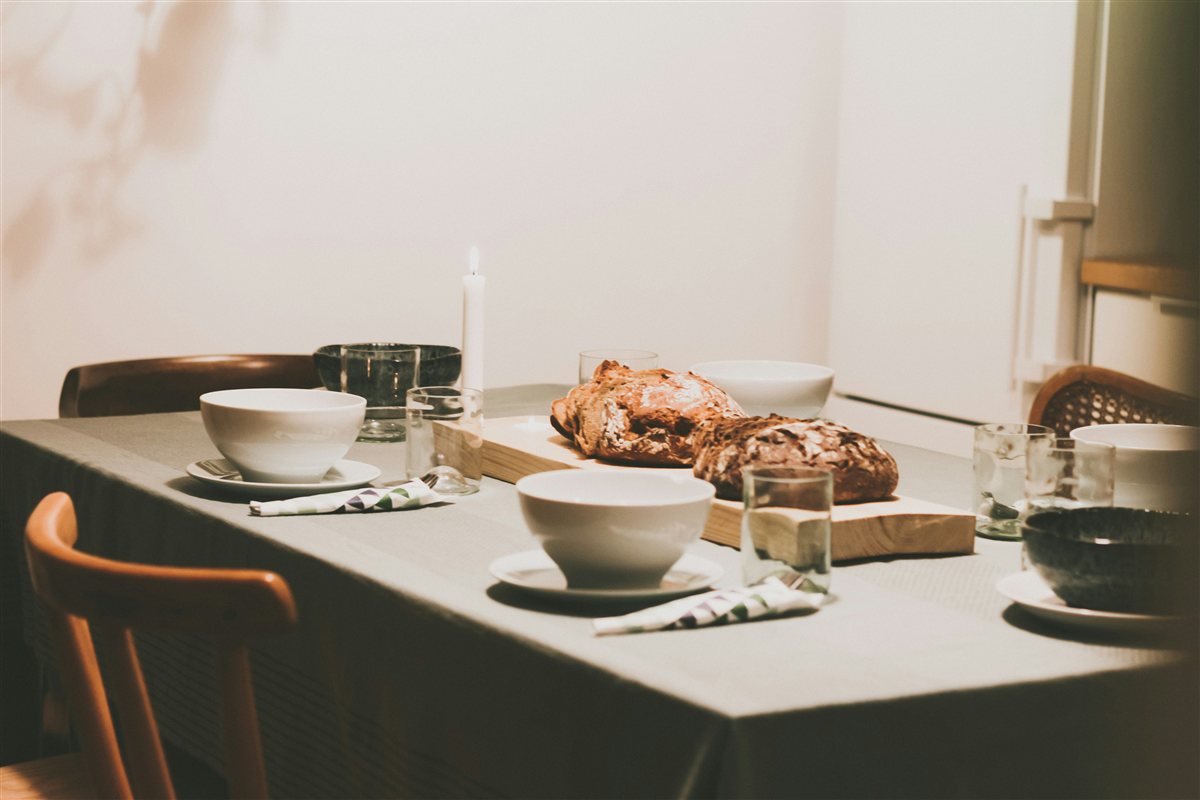
Eating together when you can. This is the one that matters most and the one most frequently sacrificed to the logistics of modern life. It doesn't need to be formal or elaborate. It just needs to be together, without phones, at a table.
A Different Kind of Resistance
There is something quietly political about making a pot of soup from scratch. About choosing the market over the supermarket. About sitting down to eat a meal that took forty minutes to prepare and taking forty minutes to eat it. None of these acts will make headlines. But cumulatively, across millions of kitchens, they represent a genuine alternative to a food system that profits from our busyness and our disconnection.
The Slow Food movement asks a simple question: what would it mean to eat as if food mattered? As if the person who grew it mattered. As if the land it came from mattered. As if the people you were eating with mattered. As if you mattered.
It turns out that answering that question (even imperfectly, even just once a week) is one of the most nourishing things you can do. Not just for your body. For everything.
"Cooking is not a chore. It is an act of love: for yourself, for the people at your table, and for the land the food came from."
Mama Sara