The single biggest difference between people who eat well consistently and those who don't is rarely motivation, knowledge, or time. It is almost always the kitchen. Specifically, what's in it.
A well-stocked pantry means that on a tired Tuesday evening, when you open the cupboard and want something real and nourishing, the answer is already there. It means that the gap between "I should eat better" and "I actually eat better" closes, because the friction has been removed. This guide is the foundation of everything we cook at Organik Mama. Every item here earns its place by being versatile, affordable, genuinely nutritious, and shelf-stable enough to keep on hand without waste.
"A stocked pantry is an act of self-care. It tells your future self: I've got you."
Mama SaraThe Organik Mama Pantry, Section by Section
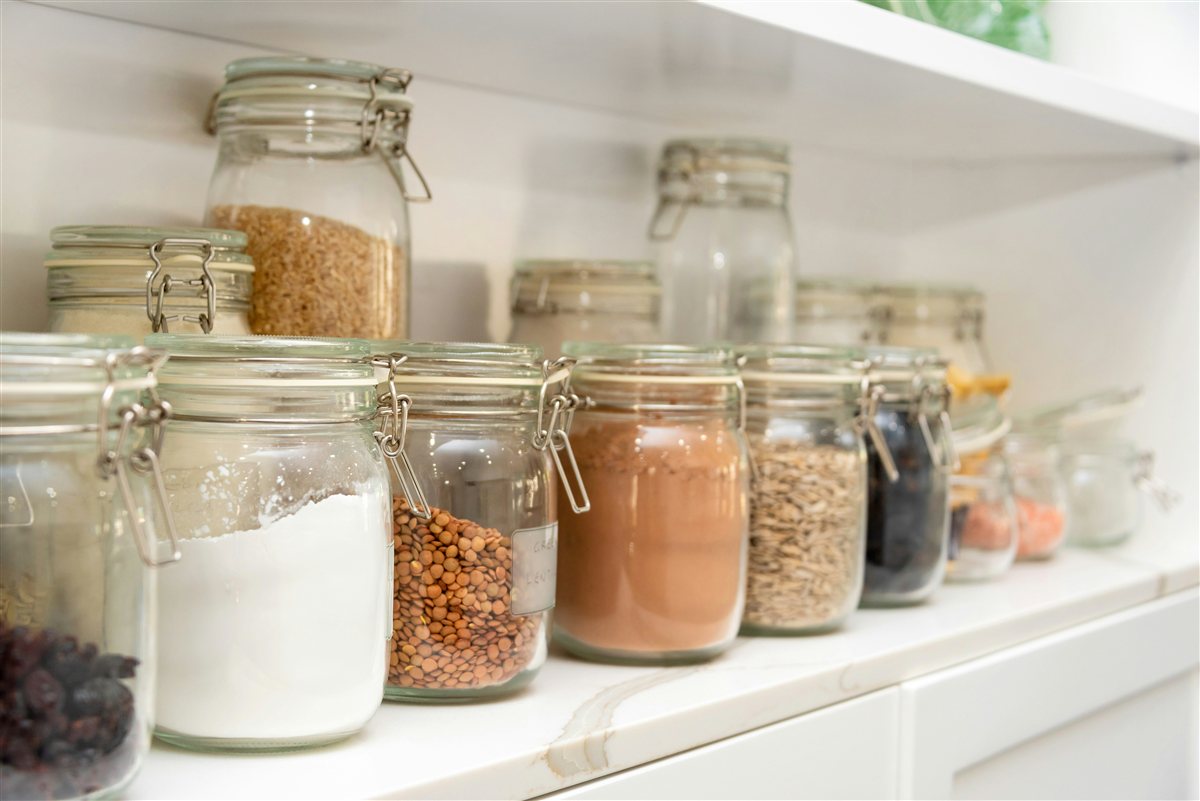
Whole grains are the backbone of the pantry. They are affordable, filling, nutritionally dense, and last for months in an airtight container. We keep three at all times: rolled oats for breakfast (porridge, overnight oats, homemade granola); brown rice as a base for almost any dinner; and quinoa for salads and quick weeknight bowls. A bag of pearl barley is worth having for soups and stews: it adds a satisfying, silky body to broth that nothing else quite replicates.
If you keep nothing else from this guide, keep oats. They are the most versatile, most nourishing, and most forgiving ingredient in the entire pantry. For more on why oats in particular deserve their place, see the everyday superfoods guide.
Tinned legumes are one of the great unsung heroes of the whole food kitchen. They are ready in seconds, cost almost nothing, and provide plant-based protein, fibre, and a remarkable range of minerals. We keep tinned chickpeas (roasted as a snack, blended into hummus, tossed into salads or curries); tinned lentils (stirred into pasta sauce, simmered into dal, mixed into grain bowls); tinned white beans (blended into soups for creaminess, mashed on toast, added to stews); and tinned black beans (for grain bowls, eggs, and simple Mexican-inspired dinners).
Dried lentils are also worth keeping: red lentils in particular cook in twenty minutes with no soaking required and form the base of one of the quickest, most nourishing soups you can make. A tin of legumes, a tin of tomatoes, some garlic and olive oil: that is a complete, nutritious meal that takes fifteen minutes and costs very little.
Nuts and seeds provide healthy fats, plant protein, and a range of minerals that are genuinely difficult to get elsewhere in a typical diet. We keep a rotating selection, but the constants are: walnuts (the richest plant source of omega-3 fatty acids, a small handful a day has real anti-inflammatory benefit); almonds (for snacking, soaking overnight, and blending into milk); pumpkin seeds (excellent on salads, soups, and porridge, high in zinc and magnesium); and flaxseed (ground, stirred into porridge or yoghurt, the most accessible plant source of lignans and alpha-linolenic acid).
Store nuts in airtight containers in a cool, dark place, or in the fridge if you buy in bulk. Their oils go rancid quickly once exposed to heat and light, and rancid fats are not a health food. The fridge extends their shelf life significantly.
Extra virgin olive oil is the most important ingredient in the pantry. The research on its health benefits is more comprehensive than almost any other single food: it is consistently associated with reduced cardiovascular disease, cognitive decline, and inflammation, primarily via its oleocanthal content and its rich polyphenol profile. Use it generously: on salads, for gentle sautéing, drizzled on finished dishes. Do not use it for very high-heat frying: above 180°C its polyphenols begin to degrade.
Apple cider vinegar (raw, unfiltered, with the mother) is the second must-have: for dressings, blood sugar support, and as a tonic diluted in water. Balsamic vinegar is worth keeping for its depth in dressings and roasted vegetable glazes. A small bottle of toasted sesame oil rounds out the collection: a drizzle transforms any Asian-inspired dish.
Spices are where the real transformation happens. A grain bowl with olive oil and salt is fine. The same bowl with turmeric, cumin, coriander, and black pepper is something you will want to eat every week. Beyond flavour, many spices have genuine therapeutic value: turmeric and black pepper, cinnamon, ginger, chilli, and garlic powder are all evidence-backed as anti-inflammatory, blood sugar-regulating, or antimicrobial agents in meaningful doses. The natural remedies guide covers several of these in detail.
Buy spices in small quantities from shops with high turnover: the pre-ground spices that have been sitting in a supermarket for eighteen months have lost most of their potency. Smell before you buy: a good spice should be immediately, powerfully fragrant.
You don't need to buy everything on this list at once. Start with what you don't have and add one or two items per week. Within a month your pantry will look entirely different, and so will your cooking. A well-stocked pantry isn't an expense; it's an investment in every meal you'll cook for the next three months.
Beyond legumes, a small collection of tinned and jarred staples makes weeknight cooking dramatically easier. Tinned whole tomatoes (San Marzano or equivalent quality, the difference between a good tin and a cheap tin of tomatoes is real and noticeable in the finished dish) form the base of countless sauces, soups, and stews. Tinned coconut milk (full-fat, not "lite") is the fastest way to build a rich, dairy-free curry base. Tinned sardines or mackerel are an extraordinary source of omega-3 fatty acids and calcium, overlooked by most, invaluable once discovered.
Good quality vegetable stock (either a concentrate, paste, or low-salt carton) should always be in the cupboard. It is the difference between a flat soup and a complex one, and between rice cooked in water and rice cooked in something that actually has flavour.
Sweeteners belong in the pantry, but chosen with intention. Raw honey (the real thing, not heat-processed commercial honey) is our primary sweetener. It has genuine antimicrobial properties, a lower glycaemic impact than refined sugar, and a complex flavour that refined sugar simply doesn't offer. Pure maple syrup is the second option: it contains small amounts of manganese, zinc, and polyphenols and has a lower GI than white sugar. Neither is a free food to pour freely, but both are meaningfully better choices than refined sugar for everyday use.
Tamari (a wheat-free soy sauce, or use regular soy if gluten isn't a concern) is an umami essential that transforms dressings, marinades, and stir-fries. Tahini is another key condiment: sesame paste that is extraordinarily high in calcium, easy to blend into dressings and sauces, and genuinely delicious.
What you drink matters as much as what you eat, and the pantry should reflect that. Green tea is the most evidence-backed tea in the world: it contains L-theanine (a calming amino acid that moderates caffeine's stimulant effects), EGCG (a powerful antioxidant linked to reduced risk of cardiovascular disease and certain cancers), and catechins that support gut health. Two to three cups a day is the dose most associated with benefit in the research literature.
Peppermint tea for digestive support, chamomile for sleep, ginger tea for nausea and circulation, these are not marketing claims but genuinely supported therapeutic uses. A well-chosen collection of herbal teas is one of the simplest and cheapest ways to support your health daily. Pair your tea habit with good hydration practice for the most complete effect.
A Note on Quality
You will notice that this guide consistently says things like "the best quality you can afford" or "good quality tinned tomatoes." This is deliberate. Food quality matters, not in a snobbish or expensive way, but because the nutritional and flavour difference between extra virgin olive oil and generic "vegetable oil," between raw honey and commercial processed honey, or between a good tin of tomatoes and a cheap one, is real and significant.
Buy the best quality you can genuinely afford in the categories that matter most: oils, tinned fish, and spices make the biggest difference. In categories like dried grains and legumes, generic and branded are virtually identical: save money there and spend it on quality olive oil.
Building this pantry takes time and doesn't happen in one shop. Add to it gradually, replace things as they run out, and within a month or two you will have a kitchen that makes whole food eating feel effortless rather than effortful. That is the whole point.
"The secret to eating well is not willpower. It's having the right things within arm's reach."
Mama Sara