A tomato in January is a deeply disappointing thing. Watery, pale, almost flavourless, a shadow of what a tomato can be. And yet most of us have grown so accustomed to produce being available year-round that we've stopped noticing. We buy strawberries in December, asparagus in October, and butternut squash in May, and wonder vaguely why food doesn't taste the way we remember it tasting.
The answer is almost always seasonality. A fruit or vegetable grown in its natural season, harvested at the right moment, and sold within a reasonable distance of where it was grown is nutritionally different from one that was picked underripe, refrigerated for weeks, and artificially ripened in a warehouse. The flavour difference is obvious. The nutritional difference is less visible but equally real.
"Nature provides exactly what our bodies need at every time of year. We just have to be paying attention."
Mama SaraWhy Seasonal Eating Matters
There are four compelling reasons to eat more seasonally, and none of them require you to become a farmer or refuse a strawberry in winter.
Nutrition. Produce begins losing nutritional value from the moment it is harvested. Vitamin C content in particular degrades rapidly. Studies have found that spinach loses up to 75% of its vitamin C within a week of harvest under conventional storage conditions. Seasonal produce, picked ripe and sold quickly, is nutritionally superior to out-of-season produce that has travelled thousands of miles. Frozen produce (snap-frozen at peak ripeness) is often nutritionally comparable to fresh seasonal produce and far better than out-of-season fresh.
Flavour. This is the most immediately obvious benefit and the most persuasive. A June strawberry grown outdoors in good soil, picked ripe, and eaten the same day is incomparably more flavourful than a January strawberry grown in a heated polytunnel in a different continent. Seasonal food needs less doing to it, because it already tastes of something.
Cost. Produce in season is almost always cheaper than out-of-season produce. It is abundant, it doesn't require artificial growing conditions, and it doesn't need to be flown from the other side of the world. Eating seasonally is one of the most reliable ways to reduce your grocery bill while eating better.
Variety and gut health. One of the most significant shifts in modern eating is the dramatic narrowing of dietary variety. Research by the British Gut Project suggests that eating 30 or more different plant foods per week significantly improves microbiome diversity and health. Seasonal eating naturally encourages variety, because what's available changes throughout the year, you're compelled to cook with different vegetables, fruits, and flavours across the seasons. This is almost certainly part of why traditional seasonal diets are associated with better gut health outcomes than a diet of the same few convenient vegetables year-round. For more on feeding your gut well, see the guide to fermented foods.
What's in Season: A Simple Seasonal Guide
The following is a general guide for temperate northern climates (UK, northern Europe, northern US). Your specific location will vary: local farmers' markets and seasonal produce apps are always the most reliable guide to what's genuinely in season near you.
Spring is the season of fresh green things: delicate, bright, and often short-lived. It is the time of year when the body genuinely craves lighter food after winter's roots and storage vegetables. Asparagus is the undisputed star: it has one of the shortest seasons of any vegetable, typically just six to eight weeks, and is incomparably better fresh and local than at any other time. Treat it simply: steamed or roasted with olive oil, lemon, and sea salt.
Peas and broad beans arrive in late spring with an intensity of sweetness they don't have at any other time. Spring onions, spinach, watercress, radishes, and the first lettuces are also at their best now: tender, vivid, and full of the vitamins the body has been depleted of over winter.
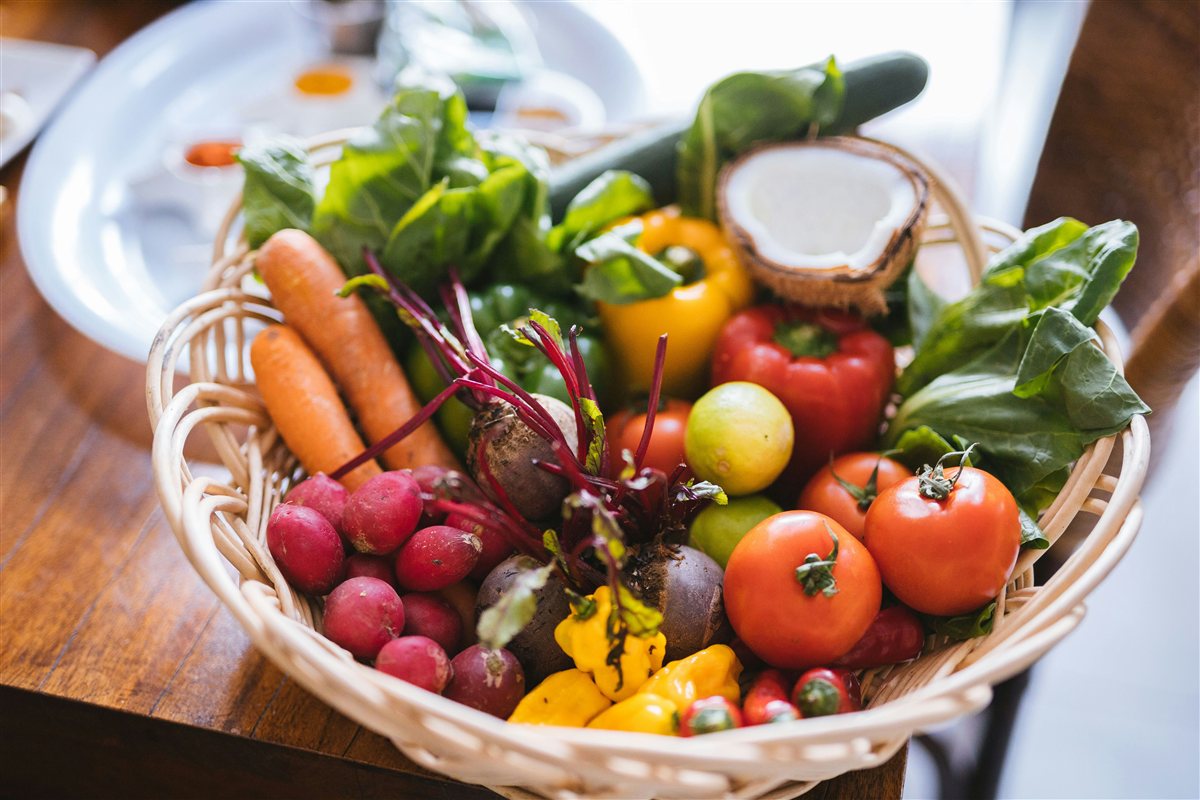
Summer is abundance. The variety of produce available from June to August is greater than at any other point in the year, and the quality is exceptional across the board. Tomatoes (the ones grown outdoors in real summer heat) finally taste the way tomatoes are supposed to taste. Courgettes, cucumbers, French beans, runner beans, sweetcorn, and peppers are all at their peak. Berries (strawberries, raspberries, blueberries, blackcurrants) are at once the most delicious and the most nutritionally potent they will ever be.
Summer is the time to eat more raw food, more salads, more fruit. The body doesn't need the warming, dense foods of winter in the middle of August. This is when eating with real attention is most rewarding, because the food is genuinely sensational.
Autumn is the pantry-filling season: rich, warming, and built for preservation. Squash and pumpkins, apples and pears, root vegetables, and the last outdoor tomatoes and peppers of the year. Mushrooms come into their own, particularly wild varieties. Kale, chard, and cavolo nero are at their best when hit by the first frosts, which convert some of their starches to sugars and deepen their flavour dramatically.
This is the season to make soups, roast trays of root vegetables, bake apples with cinnamon, and fill the freezer. Many autumn crops store well: squash, apples, pears, and root vegetables can last months in the right conditions, effectively extending the season well into winter. Autumn's abundance is the body preparing for the leaner months ahead, and eating with the season means eating the anti-inflammatory compounds found in colourful squash and brassicas at exactly the right time.
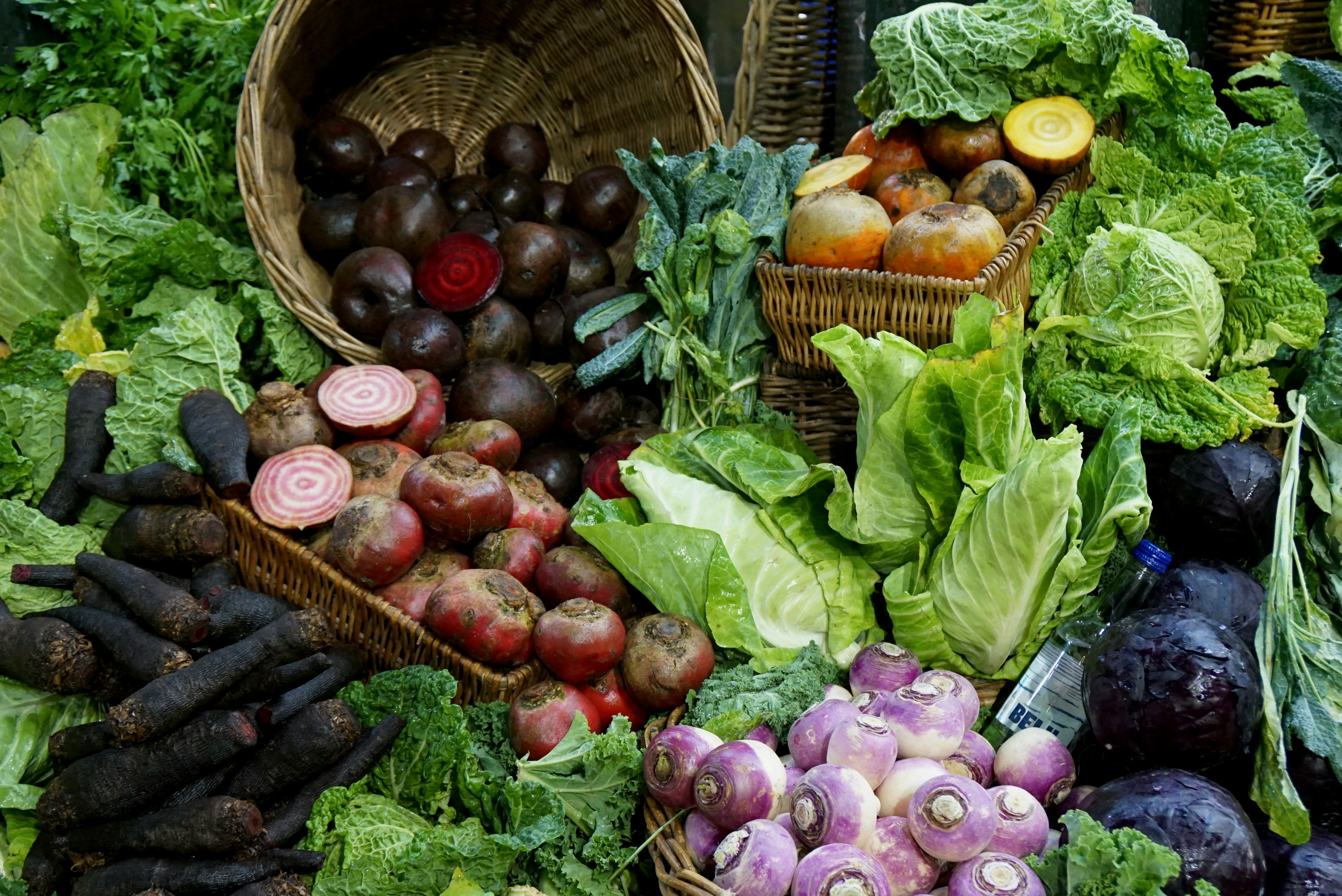
Winter is the season most people find hardest to eat seasonally, because the range is narrower and the produce requires more cooking. But winter vegetables are genuinely excellent when treated with respect. Leeks, celeriac, swede, turnips, parsnips, Brussels sprouts, and the hardiest kales and cabbages are built for long, slow cooking that transforms them entirely.
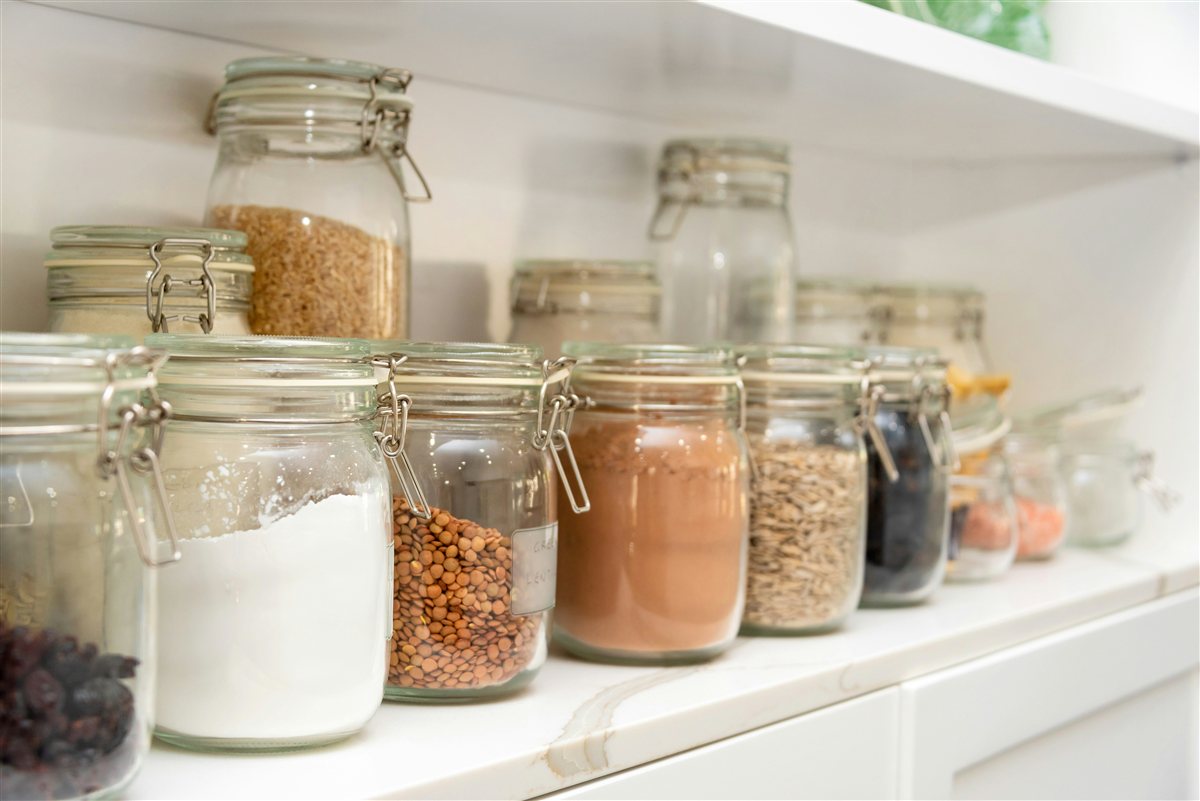
This is the season for warming soups, root vegetable gratins, slow-cooked stews, and braised greens. Citrus (though not locally grown in most northern climates) is at its peak in winter, providing the vitamin C that winter root vegetables can't deliver in quantity. A winter diet built around roots, brassicas, legumes, and citrus is more nourishing than it might appear, and the warming, hearty cooking it demands is exactly what cold months call for. Pair it with the well-stocked pantry to make winter cooking feel abundant rather than limited.
Month by Month: What's at Its Best, and When
Seasons are a useful shorthand, but produce does not arrive in three-month blocks. Asparagus is a six-week event. Purple sprouting broccoli turns up precisely when nothing else does. The table below is the month-level version, for temperate northern climates (the UK, northern Europe, and the northern US and Canada). Shift it two to four weeks later if you are further north, earlier if you are further south.
| Month | Vegetables at their peak | Fruit at its peak |
|---|---|---|
| January | Leeks, kale, Brussels sprouts, celeriac, parsnips, swede, winter cabbage | Stored apples and pears, forced rhubarb (late), citrus |
| February | Kale, leeks, cauliflower, celeriac, the first purple sprouting broccoli | Forced rhubarb, citrus, stored apples |
| March | Purple sprouting broccoli, spring greens, leeks, cauliflower | Rhubarb, stored apples |
| April | Asparagus (late in the month), spring onions, radishes, spinach, watercress | Rhubarb |
| May | Asparagus, peas, new potatoes, radishes, spinach, lettuce | Rhubarb, the first strawberries |
| June | Peas, broad beans, courgettes, new potatoes, beetroot, lettuce | Strawberries, cherries, gooseberries, early raspberries |
| July | Courgettes, French beans, cucumber, tomatoes, beetroot, carrots | Raspberries, blackcurrants, blueberries, cherries |
| August | Tomatoes, sweetcorn, runner beans, peppers, aubergine, courgettes | Blackberries, plums, blueberries, raspberries |
| September | Sweetcorn, runner beans, squash, tomatoes, leeks, beetroot | Blackberries, apples, pears, plums, damsons |
| October | Pumpkin and squash, kale, leeks, cauliflower, celeriac, parsnips | Apples, pears, quince |
| November | Brussels sprouts, kale, leeks, parsnips, swede, celeriac, cabbage | Apples, pears, cranberries |
| December | Brussels sprouts, kale, parsnips, red cabbage, leeks, celeriac | Stored apples and pears, cranberries, clementines |
If you are reading from North America, a few of these go by other names: courgette is zucchini, aubergine is eggplant, swede is rutabaga, broad beans are fava beans, and rocket is arugula. The timings hold across comparable latitudes, though a Canadian prairie winter runs longer at both ends than a British one.
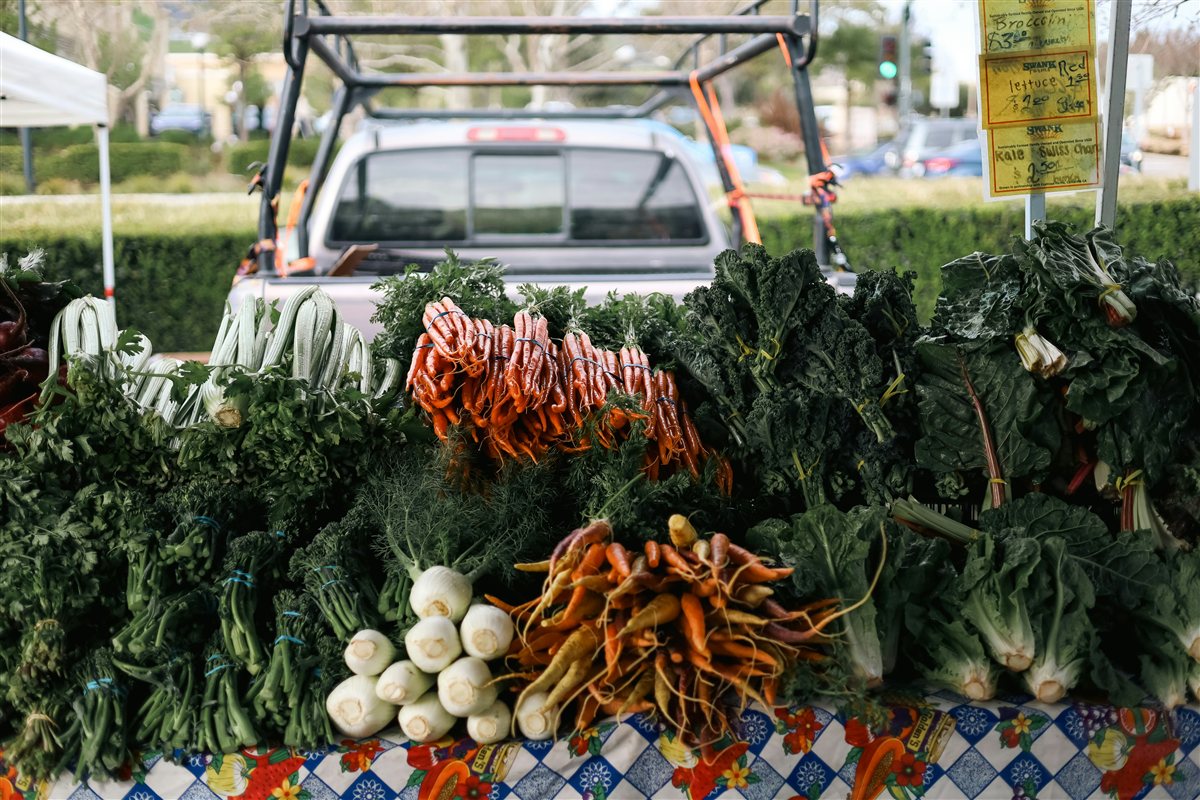
The easiest way to start eating more seasonally is a weekly visit to a farmers' market or a subscription to a local veg box. Both remove the decision entirely: you simply cook what arrives. After a few weeks, your cooking changes naturally: you stop looking for specific recipes and start asking "what can I make with what I have?" That shift, small as it sounds, is transformative.
Common Questions
Are tomatoes seasonal?
Very much so, and they are the clearest illustration of why any of this matters. An outdoor tomato ripened in real summer heat is a different food from a greenhouse tomato picked unripe in February and gassed to colour on the way to the shop. In temperate northern climates the outdoor season runs roughly July to September. Outside that window, tinned tomatoes are the better choice for cooking: they are picked ripe and processed immediately, so they carry more flavour than a fresh tomato grown out of season.
How do I eat seasonally in winter?
Stop thinking of winter as the lean season and start treating it as the brassica and root season. Brussels sprouts, kale, leeks, parsnips, celeriac and cabbage are all genuinely at their best in the cold, and several of them, sprouts and parsnips especially, are sweeter after a frost because the plant converts starch to sugar to protect itself. Add stored apples and pears, imported citrus at its peak, and the preserved and frozen produce you put away in summer, and winter eating is varied rather than restricted.
Is seasonal food actually cheaper?
Usually, and for a straightforward reason: when a crop is abundant locally, the price falls, and nothing is being paid for heated greenhouses, long-haul freight or cold storage. The saving is largest on produce that travels badly, such as berries and salad leaves, and smallest on things that store and ship well, such as onions and carrots. Buying in quantity at peak and freezing is where most of the money is saved.
Is frozen produce as good as fresh?
Frequently better, if the alternative is out of season. Frozen fruit and vegetables are picked at peak ripeness and frozen within hours, which locks in nutrients that decline steadily in fresh produce over days of transport and shelf life. Out-of-season fresh produce has often travelled for a week. Frozen peas, spinach and berries are genuinely good choices year round.
Does eating seasonally mean never buying imported food?
No, and treating it that way is the quickest route to giving up. Olive oil, coffee, rice, spices, lemons and bananas are not going to grow in a northern garden, and nobody is suggesting you do without them. The useful version of this idea is narrower: let whatever is in season locally be the centrepiece of the plate, and let everything else play a supporting part.
How to Make It Practical
Seasonal eating doesn't require perfection. You don't need to refuse every out-of-season vegetable or feel guilty about January tomatoes (though once you've noticed how much better in-season ones taste, you may choose them less often of your own accord). The goal is a general shift in direction: to make seasonal produce the default rather than the exception.
Use seasonal produce as the centrepiece. Rather than starting with a recipe and buying the ingredients, start with what's in season and find a recipe around it. This one mental shift changes your relationship with food in a surprisingly profound way. The Sunday prep reset is particularly well-suited to this approach.
Freeze at peak season. When something is at its best and most abundant (and cheapest), buy more of it and freeze it. Berries, peas, broad beans, and blanched greens all freeze beautifully and give you genuinely good produce through the lean months.
Treat out-of-season produce as a background ingredient. Frozen spinach year-round is fine. A January strawberry as the star of a dessert is a disappointment. Use the seasons as a guide for what deserves the spotlight, and let pantry staples and frozen produce fill the gaps.
Seasonal eating is, in the end, an act of attention and humility. It is accepting that food has a rhythm, that the best tomato you will eat this year has a specific six-week window, and that paying attention to that window is worth the effort. It costs no more time than any other approach. It costs less money. And it rewards you, every single meal, with food that tastes the way food is supposed to taste.
"Eat what the season offers and trust that what grows together, goes together."
Mama Sara