Herbs and spices are where the flavour comes from. That much is obvious. What is less obvious is that they are also, gram for gram, among the most nutritionally powerful foods you can eat. A teaspoon of ground cinnamon has more antioxidant activity than a full serving of blueberries. A sprinkle of dried oregano on a pizza provides more antioxidants than a glass of apple juice. Turmeric, ginger, garlic, and rosemary are the subjects of thousands of peer-reviewed studies for very good reason.
The practical implications of this are significant. Cooking with herbs and spices generously (not as a garnish but as an ingredient) is one of the simplest ways to increase the phytonutrient density of any meal without adding calories, sugar, or salt. It also makes food taste better, which is why eating well sustains itself when you learn to cook with them well.
“Your spice rack is a medicine cabinet disguised as a kitchen accessory. The question is whether you are using it, or just owning it.”
Mama SaraWhy Herbs and Spices Are So Nutrient-Dense
Plants produce phytochemicals (antioxidants, polyphenols, terpenes, flavonoids) as defence mechanisms against insects, UV radiation, pathogens, and environmental stress. Herbs and spices are essentially concentrated plant defence systems. They are the reproductive tissues, bark, roots, seeds, and leaves of plants that have evolved particularly potent chemical arsenals, often in hot and sunny climates where oxidative stress is high.
When we eat these compounds, many of them have measurable effects in the human body: reducing oxidative stress, modulating inflammation, supporting liver detoxification, improving blood sugar regulation, and feeding beneficial gut bacteria. The concentration effect matters: a teaspoon of turmeric contains far more curcumin than you could extract from the equivalent weight of most other foods.
The Herbs and Spices Worth Knowing Well
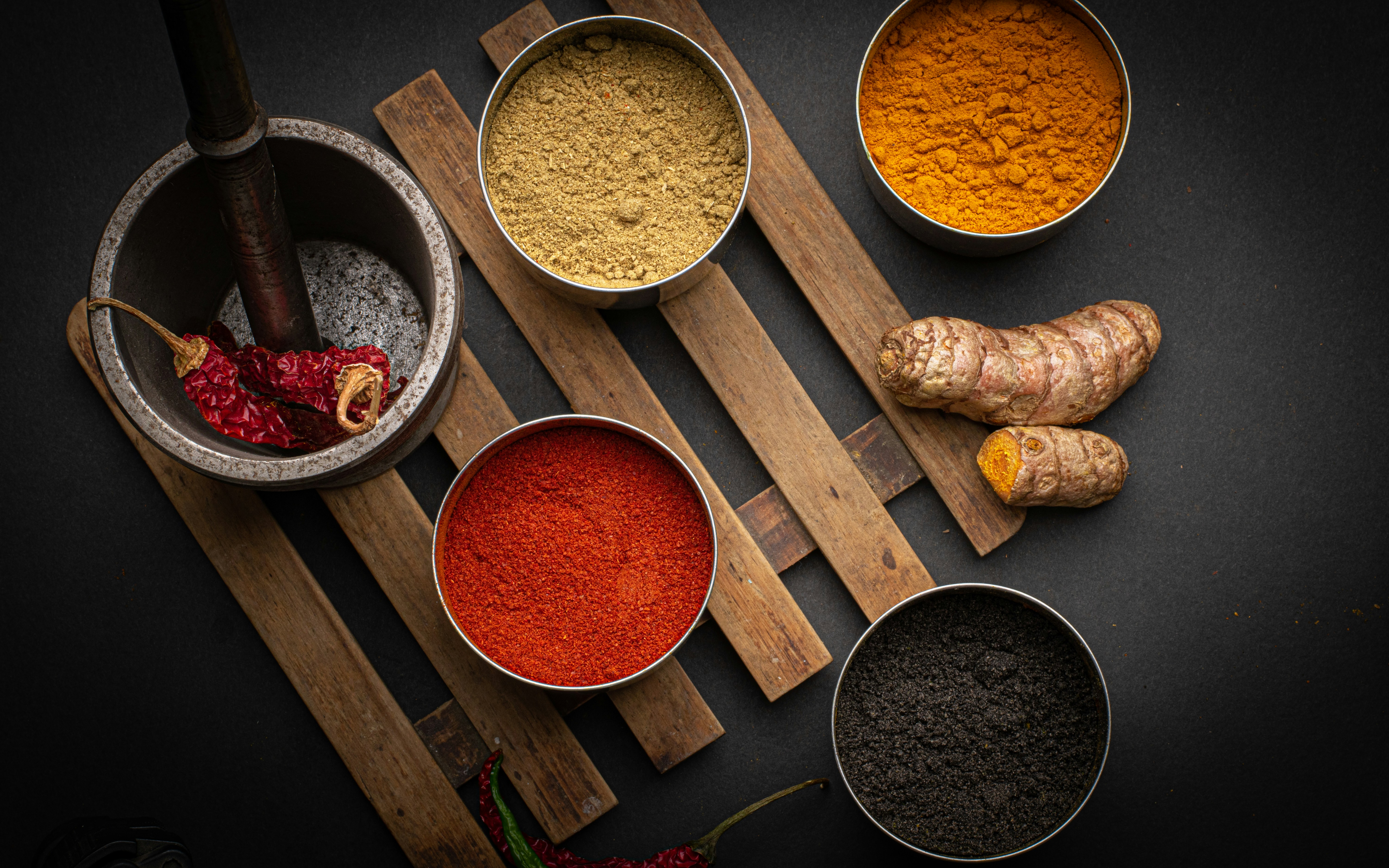
Contains curcumin, one of the most studied anti-inflammatory compounds in nature. Curcumin is poorly absorbed on its own: pairing turmeric with black pepper (piperine) increases absorption by up to 2,000%. Fat also improves absorption. Use in curries, soups, scrambled eggs, and golden milk.
Contains gingerols and shogaols, which have anti-nausea, anti-inflammatory, and digestive benefits with strong clinical evidence. It is also one of the more useful things in the cupboard when you are fighting off a cold. Particularly effective for pregnancy nausea, motion sickness, and post-exercise muscle soreness. Fresh ginger has different (and more potent) compounds than dried.
Has one of the highest antioxidant profiles of any food by weight. Some evidence for blood sugar regulation: small amounts (half a teaspoon daily) may modestly improve insulin sensitivity. Prefer Ceylon (true) cinnamon over Cassia for regular use, as Cassia contains higher levels of coumarin.
Allicin (formed when garlic is crushed and allowed to rest for 10 minutes before cooking) has antimicrobial, anti-inflammatory, and cardiovascular benefits. Raw garlic is more potent than cooked. Evidence supports modest blood pressure reduction with regular consumption.
Among the highest antioxidant scores of any herb. Contains carvacrol and thymol, which have antimicrobial properties. Particularly well suited to tomato-based dishes, roasted vegetables, and legumes. Fresh oregano is fragrant; dried is more concentrated and excellent for slow-cooked dishes.
Contains rosmarinic acid and carnosic acid, both potent antioxidants. Some evidence for cognitive support: even inhaling rosemary aroma has been associated with improved memory in small studies. Excellent with roasted vegetables, lamb, and white beans.
Rich in iron (important for plant-forward eaters), with anti-inflammatory and digestive properties. Evidence for modest improvements in blood lipids and blood sugar control with regular use. Essential in Indian, Middle Eastern, and Mexican cooking.
Piperine, the active compound in black pepper, is not just a flavour enhancer. It significantly increases the bioavailability of multiple nutrients including curcumin (turmeric), beta-carotene, and selenium. Freshly ground is considerably more potent than pre-ground.
Contains cineole and terpinene. Some evidence for digestive support, anti-inflammatory effects, and modest blood pressure reduction. Used throughout South Asian, Middle Eastern, and Scandinavian cooking: excellent in porridge, coffee, and baked goods.
Fresh Herbs as Nutritional Ingredients (Not Just Garnish)
Dried spices tend to get the nutritional attention, but fresh herbs are equally impressive, and dramatically underused. A handful of fresh herbs is not decoration. It is a meaningful source of antioxidants, chlorophyll, vitamins, and flavour compounds that transform a meal.
- Parsley: Exceptional source of vitamin K, vitamin C, and the flavonoid apigenin. More nutritious than most vegetables by weight. Eat it in handfuls: as a base in tabbouleh, stirred through soups at the last minute, or blended into sauces.
- Coriander (cilantro): Rich in quercetin, vitamin K, and potassium. Some evidence for heavy metal chelation: it may support the body’s natural detoxification pathways. A strongly polarising herb; those who find it soapy have a specific genetic variant that affects taste perception.
- Basil: Contains eugenol, a natural anti-inflammatory. Pairs beautifully with tomatoes and is excellent raw: heat reduces the volatile compounds responsible for both its aroma and some of its benefits.
- Mint: Rosmarinic acid plus menthol, which has genuine digestive and anti-spasmodic effects. Fresh mint tea is one of the most effective natural remedies for post-meal bloating and indigestion.
- Thyme: Thymol content gives thyme genuine antimicrobial properties. Also rich in vitamin C. Excellent in slow-cooked dishes, soups, and roasted root vegetables.
- Chives: Members of the allium family alongside garlic and onion, containing similar organosulphur compounds. Easy to grow on a windowsill and excellent as a finisher on eggs, soups, and salads.
Treat fresh herbs like flowers: trim the stems, place them in a glass of water, and keep on the counter or in the fridge (depending on the herb: basil prefers the counter, others prefer the fridge). Change the water every couple of days. Kept this way, most fresh herbs last 1–2 weeks rather than 3–4 days in a bag.
Herbs and Spices as a Salt and Sugar Reducer
One of the most underappreciated benefits of cooking with herbs and spices generously is that they reduce the need for salt and sugar as flavour drivers. A sauce that is aggressively seasoned with garlic, oregano, smoked paprika, and black pepper needs far less salt to taste complex and satisfying than a plain one. Cinnamon in porridge or baked goods provides warmth and sweetness perception that allows less sugar to be used.
This is not a deprivation strategy. It is a flavour strategy, and it happens to also reduce sodium and added sugar intake without any sense of sacrifice. Traditional cuisines that are associated with excellent health outcomes (Mediterranean, South Asian, Middle Eastern) are defined as much by their use of herbs and spices as by any other single factor.
Building a Practical Spice Pantry
You do not need 40 jars. A focused selection of versatile spices covers the vast majority of whole-food cooking:
- The warming base: Ground cumin, ground coriander, smoked paprika, ground turmeric, ground ginger, cinnamon. These form the foundation of curries, soups, stews, roasted vegetables, and marinades across dozens of cuisines.
- The aromatics: Garlic powder (for convenience alongside fresh), onion powder, dried oregano, dried thyme, dried rosemary, bay leaves. These build depth in slow-cooked dishes without requiring fresh herbs every time.
- The finishers: Black pepper (whole, to grind fresh), flaky sea salt, dried chilli flakes, sumac, za’atar. These add the final layer of flavour and lift that makes a dish feel complete.
- The sweet warmth: Cardamom, mixed spice or allspice, vanilla bean paste. For porridge, baked goods, and warming drinks.
Ground spices lose potency quickly. If a jar of cumin has been at the back of your cupboard for three years, it is contributing almost nothing. Smell before you use: a fresh, vivid aroma means the volatile compounds are still active. Buy in smaller quantities, store away from heat and light, and replace ground spices every 12–18 months. Whole spices (cumin seeds, cardamom pods, peppercorns) last significantly longer.
Everyday Ways to Use More Herbs and Spices
- Add a teaspoon of turmeric and a pinch of black pepper to scrambled eggs or a frittata
- Stir cinnamon and cardamom into porridge or overnight oats instead of reaching for honey or sugar
- Crush a clove of garlic and let it rest 10 minutes before adding to any dressing, sauce, or soup
- Finish soups and stews with a large handful of fresh parsley or coriander stirred in at the end
- Rub roasted vegetables with cumin, smoked paprika, and coriander before roasting
- Make a quick za’atar dressing (za’atar, olive oil, lemon) to use on anything that needs lifting
- Add grated fresh ginger to dressings, stir-fries, soups, and herbal teas
- Keep dried chilli flakes next to the stove and add a pinch to almost everything savoury
Herbs and spices reward generosity. The cook who adds a pinch of cumin is not getting the same result as the cook who uses a teaspoon, in flavour or in nutrition. A well-stocked pantry with a solid spice collection is the single most efficient upgrade available to anyone who wants to cook whole-food meals that actually taste exceptional. Start with the basics. Use them boldly. Taste as you go.